Last updated June 18, 2026

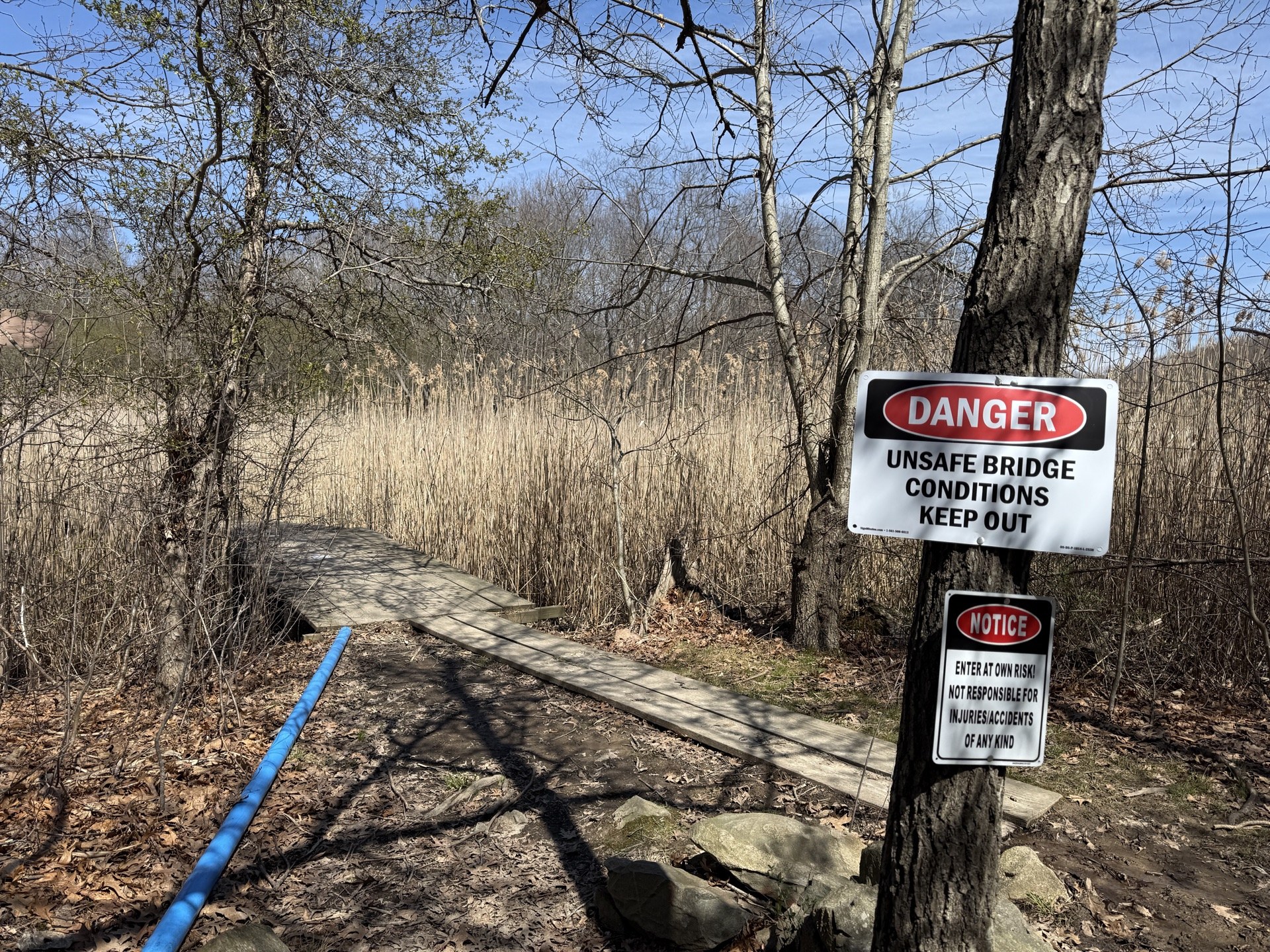
A red and white DANGER sign reading UNSAFE BRIDGE CONDITIONS, KEEP OUT, posted on a tree at the trail entrance to the Volunteers Bridge, with the wooden boardwalk stretching into the golden marsh reeds behind it. A smaller NOTICE sign below warns visitors they enter at their own risk.
The Volunteers Bridge · Forest River Conservation Area

A real repair for the Volunteers Bridge.

In June 2022 the City awarded $66,148.66 in Community Preservation Act funds toward rehabilitating the Volunteers Bridge, structured around the same volunteer-labor model that built it in 1997. The volunteer force could not be assembled, the funds went back into the CPA pool, and four years later this sign is what visitors get instead. And the developer’s new 27-page filing does not mention the bridge once.

See the efficient path to fix it

What this bridge is

Neighbors built it. Schoolkids learn on it. It belongs to Salem.

In 1997, Ward 7 Councilor Steve Dibble and more than 100 residents built this 200-foot, 6-foot-wide boardwalk across the Forest River salt marsh over two weekends, with their own hands. It was named the Volunteer Bridge in their honor, and volunteers have provided the labor to build and repair it ever since.

It sits about half a mile down the main walking trail, the destination of the stone-dust path the City built to be wheelchair-accessible in 2017, though years of root growth and erosion have since worn that accessibility away. From its decking, you can see two worlds at once: a still salt panne on one side and the flowing, brackish Forest River channel on the other.

And it works for a living. For years, Salem Sound Coastwatch has brought about 200 sixth graders a year from Saltonstall and Collins Middle School to the marsh, where the bridge is “the only possible and appropriate location” to set and retrieve fish traps for the Salt Marsh Study field trip. Preschoolers from the Greenhouse School, Salem State biology students, and teachers in summer training all use it.

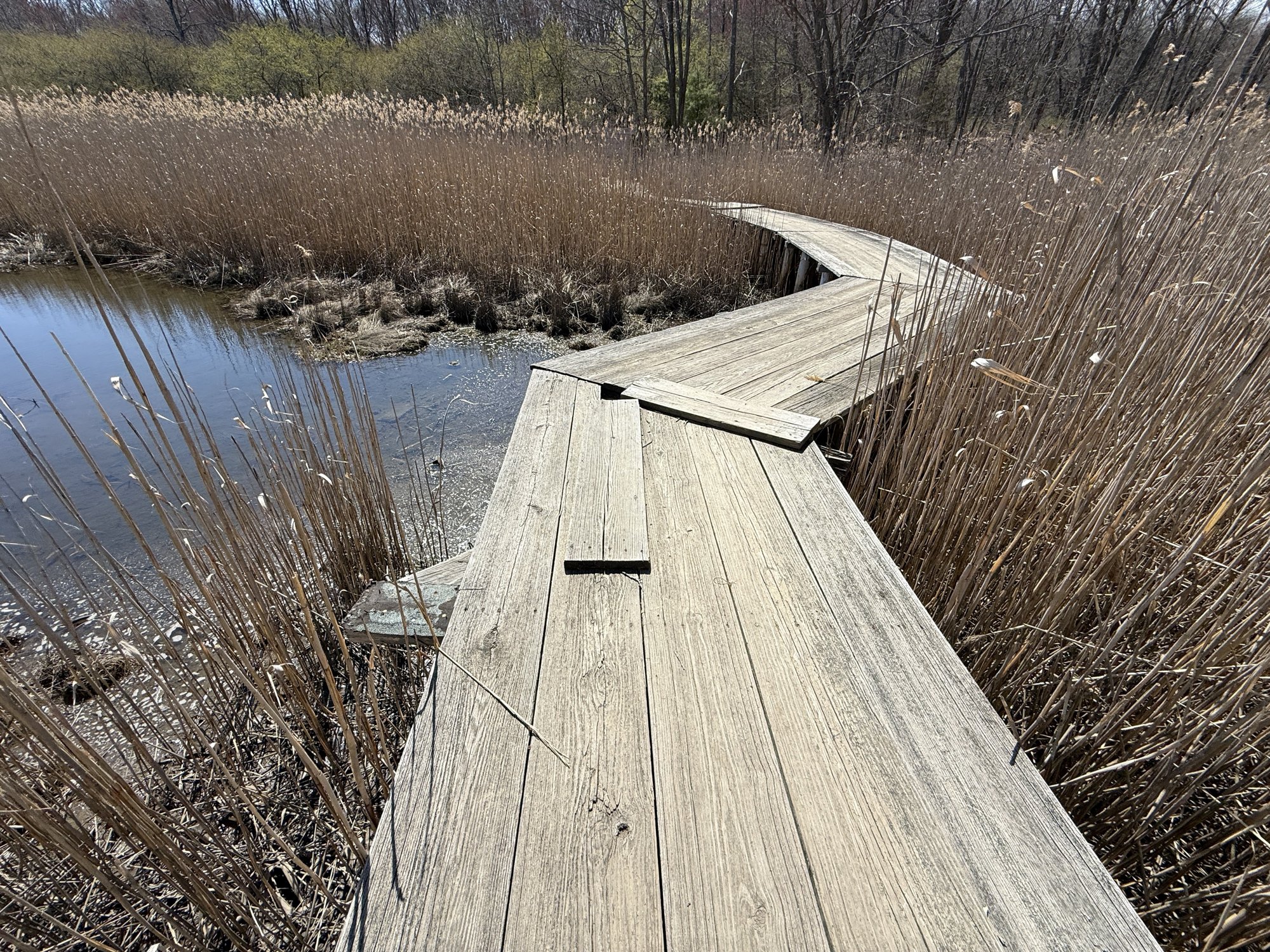
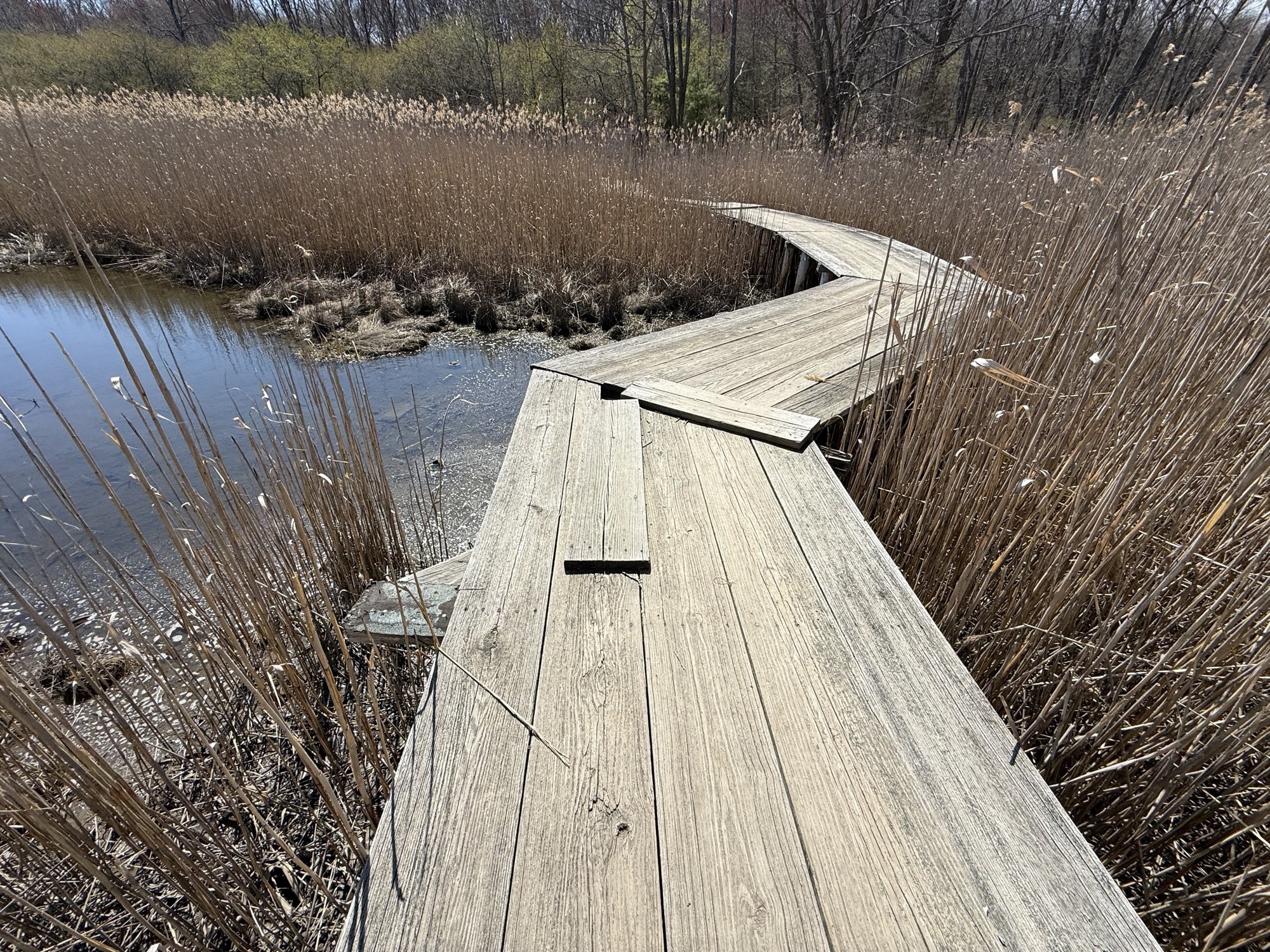
The Volunteers Bridge: a weathered wooden zigzag boardwalk crossing the Forest River salt marsh, surrounded by tall golden reeds, with a salt panne pool beside it. A few newer boards patch the old gray decking. There are no guardrails.
The Volunteers Bridge zigzags across the salt marsh between the salt panne and the Forest River channel. Built by more than 100 neighbors in 1997. Photo: spring 2026.

Sources: Salem News, “Into the deep woods of South Salem”; Salem Sound Coastwatch CPC Funding Application Narrative (2022), pp. 1–4, on file.
Follow the money

Warned in 2016. Awarded in 2022. Still waiting in 2026.

  1. The City’s own engineers sound the alarm.

    The Conservation Commission and Community Preservation Committee jointly fund a professional trails assessment by Kyle Zick Landscape Architecture and Childs Engineering. Its conclusion on the bridge, as quoted in the City’s own later grant file:

    “Severe deterioration and lack of guard rail would prevent the bridge from meeting current code.”

    The assessment found the boardwalks could not be considered ADA accessible due to loose boards and non-level entries, and explicitly recommended the Volunteer Bridge be replaced and guardrails added. Guardrails are required whenever a boardwalk is more than 30 inches above the ground, and every FRCA boardwalk exceeds that limit.

    Source: Forest River Conservation Area Trails Assessment (KZLA + Childs Engineering, Feb 2016), as quoted in the SSCW CPC Application Narrative, pp. 1–2.

  2. The City paves an accessible trail right up to the bridge.

    A year after that warning, the City spends $87,500, from a state recreational trails program and the City’s own capital improvement budget, on a stone-dust, wheelchair-accessible trail running from the Salem State South Campus parking lot all the way to the Volunteer Bridge. It made the main trunk trail something “just about anyone, regardless of their ability, is able to traverse,” in the words of then-Assistant Planner Tom Devine.

    That is what makes the broken bridge so costly. The City paid to make the route accessible for everyone, and the accessible route now ends at a span posted DANGER. The one structure that completes the trail is the one the City let fall apart.

    And the trail itself has gone unmaintained. Today the first fifty to a hundred yards have narrowed to nearly a single track as brush and roots close in, the stone-dust surface is broken by root growth, and in parts of the year standing water pools across the path deep enough to strand a wheelchair. It is doubtful the trail as it stands today would still qualify as accessible at all. The City paid to open this route to everyone, and has let both the trail and the bridge it leads to slip away.

    Source: Salem News, “Into the deep woods of South Salem” (“$87,500 from a state recreational trails program, the Conservation Commission and a capital improvement program”).

  3. Salem awards $66,148.66 toward the repair.

    The City Council approves the Community Preservation Committee’s recommendation to award $66,148.66 in CPA funds for “Volunteer Bridge Rehabilitation, Forest River Conservation Area”, to the City’s own Conservation Commission, with Salem Sound Coastwatch as implementing partner. The award was structured around the same model that built the bridge: paid materials, volunteer labor. The award letter’s terms:

    July 1, 2022

    Work commences

    One year

    To complete all work

    Nov 10, 2022

    First quarterly report due

    The 2022 plan was the same one that built the bridge: paid materials, volunteer labor. The construction itself was to be donated by volunteers, work a private contractor would have charged the City at least $318,000 to do, and the application noted that two engineers on the Conservation Commission had already inspected the existing pilings and found them still in good condition, reusable. But the volunteer force that showed up in 1997 could not be assembled in 2022. Without that labor, the work could not begin, and the funds returned to the CPA pool.

    Sources: Volunteer Bridge Award letter, City of Salem Dept. of Planning & Community Development, June 30, 2022; SSCW CPC Funding Application + Narrative (2022). All on file.

  4. Still no guardrails. Still not rebuilt. Still not mentioned.

    Walk out to the bridge today and you will find patched boards on an aging frame, and still no guardrails, the exact code failure the City’s engineers flagged a decade ago. The comprehensive rehabilitation the grant was meant to cover, reframing on the existing pilings, full new decking, guardrails and toe-boards on both sides, accessible ramps at both ends, has not been done.

    Splintered and lifted deck boards at the edge of the Volunteers Bridge where it meets the marsh reeds, with loose planks sitting out of place on the walking surface.
    Lifted and broken deck boards on the walking surface today. Photo: spring 2026.
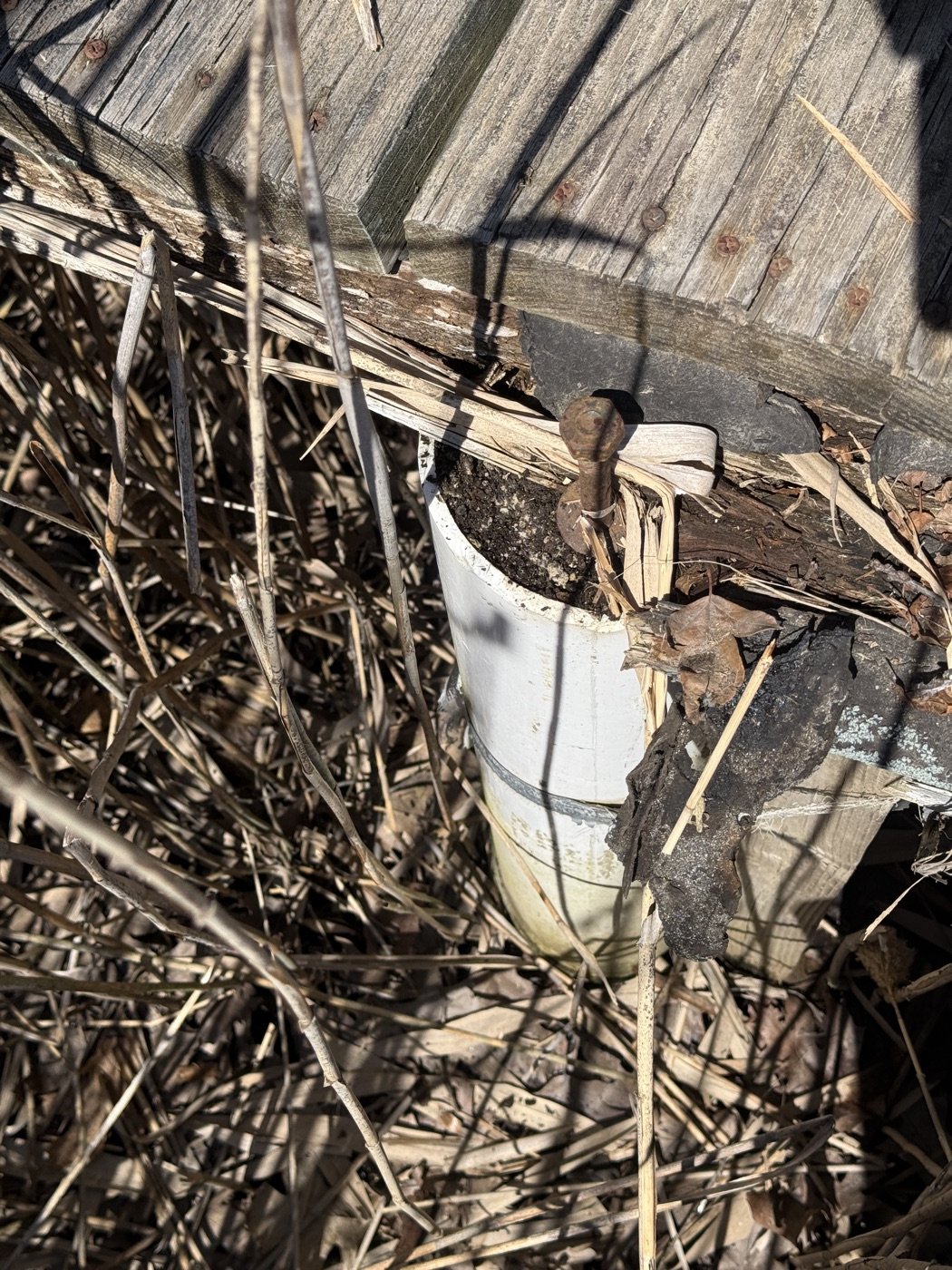
    Close-up of the Volunteers Bridge edge showing weathered gray decking with no guardrail, and a deteriorating white PVC-sleeved piling post amid the marsh reeds.
    Weathered decking, exposed piling sleeve, and no guardrail, the same code failure the 2016 assessment warned about. Photo: spring 2026.

    Meanwhile, the developer redeveloping the land at the bridge’s doorstep filed 27 pages of supplemental plans on June 9, 2026, trail connections, plantings, benches, signage. The Volunteers Bridge appears in that filing zero times.

    Source: Supplemental Submission to NOI, Goddard Consulting LLC, June 9, 2026 (DEP File #064-0825).

The roadmap · the efficient path

There is a faster, cheaper way to fix this bridge. The law already allows it.

The City’s stated plan is to apply for money to study the bridge, then, in a later round, apply again for money to repair it. There is a more direct route that costs less and finishes years sooner. Here it is, in three steps.

1

Use the homework that’s already done.

The bridge was professionally assessed in 2016 by Kyle Zick Landscape Architecture and Childs Engineering, which recommended replacement and guardrails. In 2022 the repair was scoped, costed, and awarded, after engineers serving on the Conservation Commission inspected the pilings and found them sound and reusable. The condition is documented. A new study would largely re-purchase answers the City already has on file.

2

Fund the repair directly, in one round, not two.

The Massachusetts Community Preservation Act, the same fund Salem used in 2022, expressly allows money to be spent on the rehabilitation and repair of public trails and recreational land. A separate study is not required by law before the City appropriates repair money. Studying first is a choice, not a legal step.

Why “study first” costs years

Salem runs one CPA funding round a year, eligibility applications in early January, full applications by late March, recommendations to the City Council in May. Applying in the next round only to fund a study means the construction money has to wait for a second round the following year. That pushes the actual repair to 2028 or later. Applying directly for the repair uses a single round.

And it cannot safely wait

The bridge is already posted UNSAFE, KEEP OUT, and the City’s own 2016 assessment found it fails code for lack of guardrails. Its deck deteriorates further every year, faster as it ages. A funding path that does not reach construction until 2028 or 2029 asks the public to wait years more on a structure the City itself has already flagged as dangerous, and every year of delay raises the odds that part of it fails, or that someone is hurt on it first.

3

The chance to make the developer help was the rezone. Mayor Pangallo let it pass.

A rebuild that meets today’s code, guardrails, new decking, accessible ramps, is professional construction work. The 2022 plan stretched its $66,148.66 award with donated volunteer labor, work a contractor would have charged at least $318,000 to do; take the volunteers out and the funding gap is plain.

The one party with a real stake next door is the developer, whose new residents will cross this bridge by the hundreds. But the developer never committed to it, its filings do not mention the bridge once. The moment to make them help was when the City rezoned this land, a decision worth a fortune to the project. Mayor Pangallo had that leverage, and the City secured nothing for the bridge. With the rezoning and the site plan now approved, that chance is gone. A developer contribution is not coming, and pretending otherwise only delays the fix.

So it now falls to the public, and the path is the plain one. The City awarded funds toward this repair once, in 2022, and the fund built for exactly this, Community Preservation money, paid by Salem property owners, is still there. The honest thing for the City to do is own the missed opportunity and fund a real repair now, not spend another year studying a bridge its own engineers already assessed. City Hall’s missed leverage lands on Salem taxpayers either way; the only question left is whether the bridge gets fixed or just studied again.

The man who helped build the bridge said it first

“The developers should be giving something very big and very substantial back to Salem to protect our neighborhood.”

Steve Dibble, who helped build the Volunteers Bridge with neighbors, and a former Salem senior planner, Conservation Administrator, and city councilor, at the August 12, 2024 community meeting. The City had its moment to secure that substantial give-back. For the bridge, it secured nothing.

The cleanest source of all: the development’s own money

Salem is approving this project under a state Chapter 40R “Smart Growth” overlay, and for that, the state pays the City directly: a one-time incentive payment plus $3,000 for every new unit it permits. Across roughly 485 units, that is well over a million dollars flowing to the City because this development was approved. No fund is a cleaner match for the bridge than the money the development itself generated, a public asset its own residents will cross, repaired with the public money the project brought in.

One route, one standard

Fix the whole path, not just the bridge.

To win this land, the developer’s own proposal promised “a series of accessible footpaths” through the woodland and called the open space “an inclusive space for residents and the wider community.” Accessibility was their standard, not just ours.

That standard is not being met. The stone-dust path the City built to be wheelchair-accessible in 2017 has worn down with roots and uneven, tripping-hazard footing, and holds standing water at points where a wheelchair could be stranded in the wetter months. There is no plan to restore it.

So funding an accessible bridge, new decking, guardrails, ramps at both ends, at the end of a trail no wheelchair can pass would spend public money on a destination its intended users cannot reach. The new development next door will itself be home to residents who use wheelchairs, among the very people this access is meant to serve. The sensible plan funds the whole route to one accessible standard, trail and bridge together. This is not a knock on accessibility. It is the opposite: making sure the money actually delivers it.

It has been done, with this exact fund

Holliston, MA

CPA funds helped restore the historic 8-Arch Bridge on the Upper Charles Rail Trail, about $790,000 toward masonry, drainage, and safety railing, with the physical repairs completed in 2018.

Boston, MA

The City recommended about $650,000 in CPA funds to restore the Evans Way footbridge in the Back Bay Fens, capital improvements and extraordinary repairs to a public pedestrian bridge.

A tale of two cities

Other Massachusetts cities used their leverage. This project’s record shows none.

Somerville

When the Union Square redevelopment needed the City’s zoning approval, Somerville used that leverage to secure roughly $91 million in negotiated community benefits from the developer, including $5.5 million toward the Green Line Extension, and a signed community benefits agreement.

The mayor’s own framing: “we set a higher bar… we demanded a master plan.”

Salem · this project

Salem faced the same kind of moment, a major redevelopment, directly beside the conservation area, that needs the City’s discretionary approvals. Yet the public record of this approval shows no developer contribution to the trail or the Volunteers Bridge, and no community-benefits agreement of the kind other cities have secured, only the words “enhanced connectivity.” The bridge anchors the trail network beside a development of up to 485 new apartments that will draw new visitors to it.

Two cities, the same kind of leverage. Only one used it for its residents.

Sources: M.G.L. c.44B §§2, 5 (CPA, rehabilitation of recreational land, including trails). City of Salem Community Preservation Committee, FY26 Community Preservation Plan and application calendar (eligibility Jan. 5, 2026; funding applications ~Mar. 27, 2026; Council recommendations May 2026). Community Preservation Coalition project records, Holliston 8-Arch Bridge and Boston Evans Way footbridge. City of Somerville, Union Square master-developer covenant press release, April 2017. Massachusetts DCAMM, Salem State South Campus disposition pages; City of Salem Planning Board minutes, April 9, 2026.

What really happened in 2022

The volunteer model that built the bridge could not rebuild it.

The 2022 grant was designed the same way the 1997 bridge was built: materials paid for, labor donated by volunteers. The construction itself was to be donated by volunteers, work a private contractor would have charged the City at least $318,000 to do. But the City could not assemble the volunteer force. Without that labor, the work could not begin, and the $66,148.66 returned to the CPA pool.

That is not misuse, and it is not a budget problem. Community Preservation Act money is legally walled off from the City’s general fund, it cannot be touched by deficits, and it exists for exactly this kind of project.

The bridge carries the name of the people who built it. In the 1990s they gave up their weekends and carried the lumber in by hand so the community could cross the marsh and reach the rest of the conservation area, more than 90 acres of Salem woods on the far side. The City tried to fix it the same way in 2022, and this time the volunteers never came. That is not a failure of will. It is a sign of how much has changed: the Salem that could turn out a crowd of neighbors for a weekend build is not the Salem of today, where it can be hard to get five people to show up for anything. None of that makes the bridge any safer to cross. Honoring the people who built it does not mean waiting on volunteers who are not coming. It means finishing what they started, and paying for it like the real construction it now is. The first volunteers built this bridge with their hands. The ones it needs now are the people who sign their name and pass this on.

Sources for this page: Volunteer Bridge Award letter, City of Salem DPCD, June 30, 2022 (CPA award $66,148.66; one-year completion; quarterly reporting; six-month activity clause). Salem Sound Coastwatch FY22 CPC Funding Application and Narrative, March 2022 (1990s volunteer construction; 2016 KZLA/Childs assessment quotes; piling evaluation by Conservation Commission engineers; volunteer-donated construction, with the application's own estimate that a contractor would charge the City at least $318,000 to do the work; School-to-Sea programming). Salem News, “Into the deep woods of South Salem” (1997 construction, $87,500 accessible-trail grant). Supplemental Submission to NOI, Goddard Consulting LLC, June 9, 2026, DEP File #064-0825 (no mention of the bridge).

Tell City Hall

No more studies. The file is complete.

In the Mayor’s June 16 letter to the Conservation Commission, the City said it will apply to the Community Preservation Committee next year to fund an assessment of the bridge and the development of repair plans. But much of that work is already on the City’s own shelf: the condition was assessed by engineers in 2016, the pilings were inspected and found sound in 2022, and the repair was scoped and awarded in 2022. A new assessment would spend another year before any repair money is even identified, on questions the City’s own files have largely answered.

One click opens a pre-written email to the Planning Department. Each click loads one of five versions, so the inbox fills with neighbors, not copies. Add your name and address before sending.

Goes to the Deputy Director of Planning & Community Development, with a copy to the Mayor’s office. Remember to replace the name and address placeholders before you hit send.

The Conservation Commission public hearing is closed; the Order of Conditions passed unanimously.

Be a volunteer this time

This time, all it takes is your name.

In 1997, restoring the bridge took neighbors with hammers and planks. This time, doing your part is simpler: add your name to the petition, then pass it to someone who walks these trails. Every signature brings the repair closer.

Add your name

Sign the Petition

At 100 signatures we deliver it to the City: repair the Volunteers Bridge.