Last updated June 12, 2026

June 9 · The Pressure Worked

The developer just put the Loring Ave trail back in their plans — the one they called “not feasible” in May. None of it is binding until June 16.

See What Moved
Forest River Conservation
Next ConCom Hearing
00Days
:
00Hrs
:
00Min
:
00Sec
Join ConCom Hearing (June 16)
The Developer’s Own Site Plan · Forest River, Salem

They drew the trails. Then said they couldn’t be built.

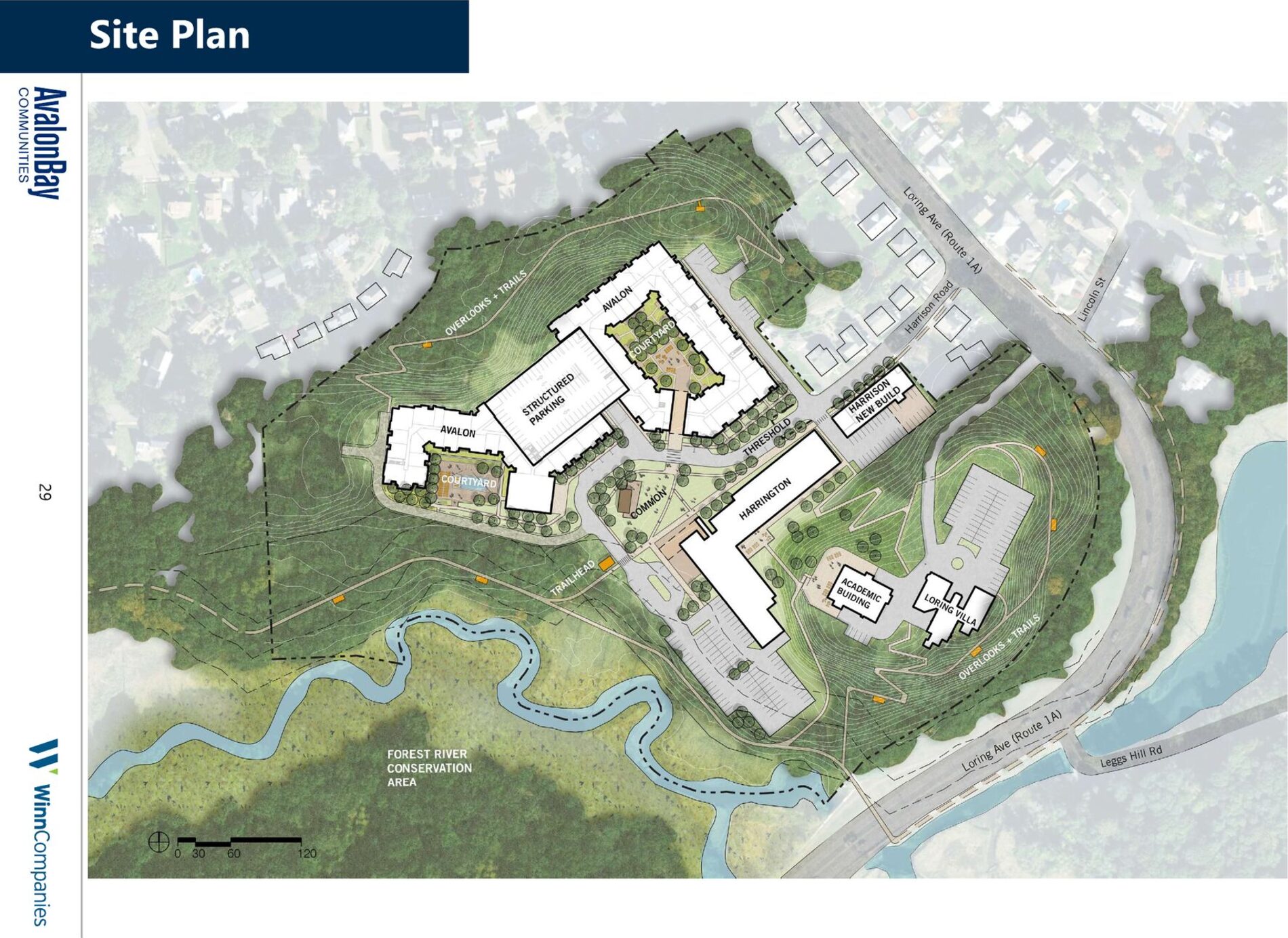
To win the public bid for the Salem State South Campus, the developer promised accessible trails and overlooks through the Forest River woods, and mapped them on the plan below. At the May 19 hearing, they called those same trails “not feasible.” Then Salem pushed back — and on June 9 the developer put the first piece, the Loring Avenue trail connection, back in their own filing. The pressure is working.

AvalonBay and WinnCompanies official Site Plan from their winning RFP submission. Two areas labeled 'OVERLOOKS + TRAILS' show switchback footpaths climbing steep, densely-contoured hillsides on the western and southern sides of the site, beside the Avalon buildings and Loring Villa, above the Forest River Conservation Area.
AvalonBay + WinnCompanies Site Plan, from their winning RFP submission. The switchback paths labeled “OVERLOOKS + TRAILS” climb the contoured hillsides where the developer now says those trails are “not feasible.” Decide for yourself: view the developer’s original Site Plan (PDF).

The South Campus is going away. Let’s save the trails.

The university campus is being replaced by up to 485 private apartments across two phases. On April 23, the Planning Board approved Avalon’s Phase I (340 units); Winn’s Phase II was continued. On May 19 the Conservation Commission hearing was continued after the developer disowned the trail network in its own proposal. On June 9, after a site walk and weeks of public pressure, the developer filed a commitment to build the Loring Avenue trail connection it had called “not feasible.” On June 16 the Commission takes the Order of Conditions back up — the only venue that can make that commitment binding, and require the rest of the accessible trails, overlooks, and public access the developer proposed.

Dear Salem ConCom Agent,

I am writing as a Salem resident
about DEP File #064-0825…

+ your name here

Let ’em know.

Already written. Just add you.

⚠ Remember to add your Name & Address to the email!

— The full case, in three parts —

This site has three more pages. Start anywhere.

New petition

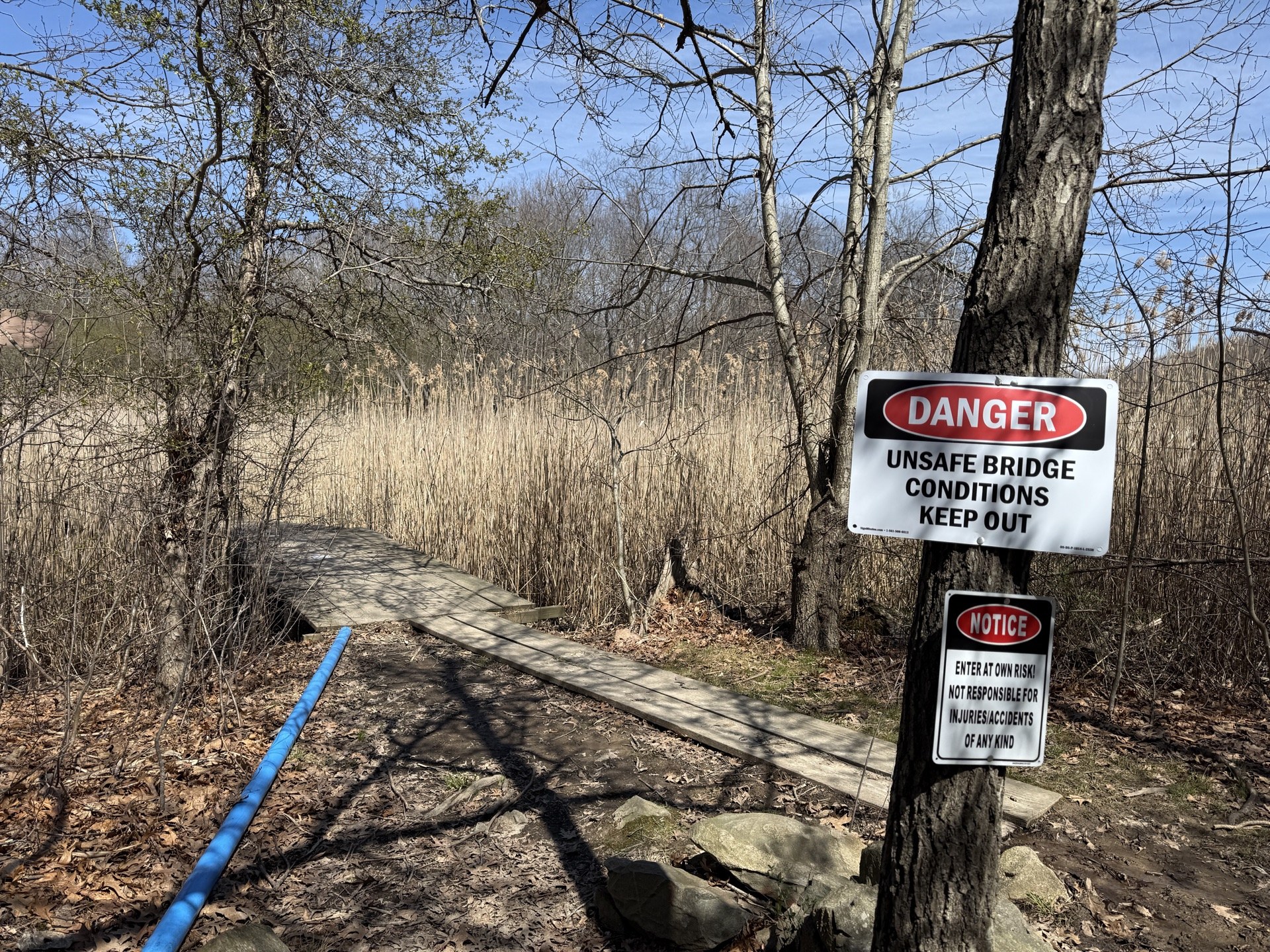
Repair the Volunteers Bridge.

At 100 signatures we deliver it to City Hall.

Add Your Name
Update · June 9, 2026 · From the Developer’s Own Filing

They just put the Loring trail back. That was you.

On June 9 the developer’s own consultants filed new plans with the Conservation Commission committing to a 5-foot-wide public footpath from Loring Avenue to the Forest River trailhead — with access written into the easement “in perpetuity.” Three weeks ago they told the Commission this was “not feasible.”

2022 · To win the land

The winning proposal promised a path from Loring Avenue into the trailhead, and drew a trail network through the woods, to win the public bid.

May 19 · Land secured

At the hearing, the developer called the promised trails “not feasible.” A commissioner called it a bait-and-switch. The room pushed back.

June 9 · Under pressure

After a packed hearing, a site walk, and weeks of letters, the Loring connection is back in their own filing — which calls it “likely the largest improvement.”

Klopfer Martin Design Group Conservation Area Improvements Plan, sheet L1.1, dated June 9, 2026. A single red line labeled 'PUBLIC FOOTPATH CONNECTION' runs from Loring Avenue, behind the Harrington Building parking lot, to the Forest River trailhead. Notes read 'Widened Loring trail connection' and 'Improvements on DOT land subject to DOT approval.' An enlargement panel details the trailhead: bike racks, bench, trash and dog bag dispenser, granite markers, permeable pavers, and reserved trailhead parking.
The developer’s own new plan (KMDG, sheet L1.1, June 9, 2026). The red line is the committed public footpath: Loring Avenue, behind the parking lot, to the trailhead. Count the trails: one. A single 5-foot connector — where the plan that won this land drew an entire network of woodland trails and overlooks. Note the fine print at lower left: “improvements on DOT land subject to DOT approval.” See for yourself: view the full plan sheet (PDF).

Let’s be clear about what this is

This is not a gift. This is the developer agreeing to do part of what they promised four years ago to win public land. The terrain never changed. Their own June 9 letter admits the rules they blamed “originally appeared to be a barrier” — appeared. It took a peer review, a continued hearing, a Commission-ordered site walk, and a city’s worth of letters and testimony to get a commitment back to roughly where it started.

That is the lesson of June 9, and it cuts both ways. Pressure works on this developer. And without pressure, the default is the bare minimum. The rest of the promise — the trail network, the overlooks, the bridge — is still on the table, and there is one hearing left.

And watch what a well-timed concession does. The good news travels. The hearing room thins. And the rest of the promise quietly disappears into an approved Order. The answer to a partial concession is not a smaller crowd on June 16. It is a louder one.

Clawed back under pressure · per the June 9 filing

  • The Loring Ave trail connection — a 5-foot permeable footpath from Loring Avenue, behind the parking lot, to the existing trailhead. Winn is reconfiguring its parking to fit it.Already in the 2022 package · the proposal named this exact Loring Ave path
  • “In perpetuity” language — the developer says Loring access will be written into the final public-access easement, permanently.Already in the 2022 package · public access was required and scored in the RFP
  • Invasive-plant removal roughly doubled — four management zones (~21,000 sq ft plus the trail edges), no herbicides, native replanting, a wetland scientist on site.Baseline wetlands mitigation · owed in any project this close to the river
  • A real trailhead package — benches, bike racks, a dog-waste station with weekly trash service, granite boundary markers, reserved parking, and repair of the outdoor classroom area.Already in the 2022 package · the “enhanced connectivity” promise
  • Naumkeag land-acknowledgement signage — two locations identified, all signage subject to City approval.Genuinely new · added at the Commission’s and residents’ request

Read the tags. Four of these five were part of the package that won the land in 2022. One is new.

Still missing · what June 16 must lock in

  • The trail network and overlooks they drew to win the bid — still disowned. June 9 restores one connector path, not the network.
  • The Volunteers Bridge — zero mentions in all 27 pages of the new filing.
  • Binding language — the filing says the developer “intends” to put the trail in the easement. An intention is not a recorded deed or an Order of Conditions.
  • A fallback if MassDOT says no — the Loring end of the new path sits on state highway land, “subject to DOT approval.” No DOT approval, no connection.
  • Long-term upkeep — monitoring ends after two years, and daytime weekday trailhead parking is still ambiguous in the developer’s own clarification.

The floor and the ceiling

The 2022 package is the floor. A win starts above it.

Getting back what was already promised is not a concession to celebrate — it is the starting line being restored. The question for June 16 is not “is this enough to say thank you?” It is: bind the floor, then build above it. Above the floor looks like:

  • The Volunteers Bridge repaired — developer-funded professional construction on the repair Salem already funded with CPA money in 2022. The full story.
  • Real visitor parking — ten deeded public spaces, available all day, every day — not five visitor spots whose public hours are defined around the developer’s business day.
  • Maintenance that doesn’t expire — trail, plantings, and trash service obligations that outlive the proposed two-year monitoring window, recorded so they bind every future owner.

Why June 16 is the whole ballgame

The same June 9 filing asks the Commission to issue the Order of Conditions — to close the hearing and approve the project. Every commitment above is, right now, words in a consultant’s letter. The Order of Conditions is the one document that turns words into obligations. One trail back is not the deal Salem was promised. They moved because Salem was watching. Be there when it counts — and stay on it until all of it is binding.

Source: Supplemental Submission to NOI, Goddard Consulting LLC on behalf of AvalonBay Communities and WinnDevelopment, June 9, 2026 (DEP File #064-0825) — trail commitment and “largest improvement” at pp. 3 & 6–7; easement “in perpetuity” at p. 2 (comment 1); “originally appeared to be a barrier” at p. 6; invasive-management zones in the revised Invasive Species Management Plan (rev. 6/09/2026), p. 5; trailhead package at p. 2; parking-hours clarification at p. 5 (comment 10); “subject to DOT approval” on Klopfer Martin Design Group sheet L1.1 (June 9, 2026); request to issue the Order of Conditions at p. 10.

First, to be clear

We support this housing. That’s the whole point.

Salem needs homes, and this project delivers real ones. WinnDevelopment — the nation’s largest manager of affordable housing — is committing to roughly 60% affordability across the 55+ community in the historic Loring Villa and Convent buildings, and the broader project reserves roughly half its units for households at or below 80% of area median income. That is genuinely needed housing, and it deserves to get built.

This is not a fight against the housing. It is a request that the developer keep one promise they made to win this public land: build the trails they drew. The homes and the trails were always meant to come together — that was the deal.

Source: AvalonBay + WinnDevelopment RFP response (affordability commitments).

Dig into the full case

The receipts, the history, and the bridge — each on its own page.

— Why June 16 matters —

The Conservation Commission still holds the lever.

The redevelopment cannot be built without work inside the 25-foot No-Disturb Zone and the 100-foot Wetlands Buffer. That waiver is discretionary — and the conditions attached to it are the Commission’s authority. Here’s the framework, the precedent, and the specific conditions to back.

1

Smart Growth Zoning (40R)

A Massachusetts law allowing developers to build high-density housing (like these 485 units) in areas near transit or town centers.

2

The Incentive

The City receives state payments per unit — roughly $1.75M total for this project. Earmarked for municipal capacity (schools, services), not developer infrastructure.

3

Our Leverage

Because the project sits inside the Wetlands Buffer and No-Disturb Zone, the Conservation Commission’s waiver is discretionary — and conditions can be tied directly to project impact.

It’s Been Done Before

Easton, MA (Queset Commons)

The Town received the state’s $350K 40R zoning incentive — and still required the developer to fund $1.5M in off-site traffic improvements (Rt 138/123, 138/Roosevelt Circle), plus an on-site developer-built wastewater plant. Driven by Planning Board and Town Meeting.

Grafton, MA (Fisherville Redevelopment)

14.15 acres (Mill Villages Park) deeded to the Town under Article 97 — a state constitutional protection requiring a two-thirds Legislature vote to alter. Connected to the Blackstone River Greenway. Driven by Town Meeting and Planning Board.

The Pattern, Not the Ceiling

In every approved 40R where conditions were imposed, the state’s incentive was treated as a floor, not a cap. Off-site mitigation, deeded open space, developer-funded infrastructure — each conditioned on top of the state payment. Salem’s ConCom holds the same kind of authority on this project, narrower in scope but discretionary, and conditionable on impact.

P

The Parking Problem

The current plan provides only 4 public spaces (3 regular + 1 ADA). At April 23 the developer offered on record to add one additional spot — bringing the total to 5 — against 683 parking spaces for project residents (524 in Phase I’s garage, 159 surface in Phase II). For a 140+ acre regional resource, five public spots is inadequate. Without 10 deeded public spaces, the Forest River and Salem Woods trails become a private amenity for the 485 new households.

T

The Trail Promise, in Their Words

The trail commitment is not the public’s wish list. It is the developer’s own proposal, in writing, in the section titled “Forest River Conservation Area Access.” What they offered to win the bid:

  • “a series of accessible footpaths will weave through the existing woodland areas with overlook spaces on the western and southern sides of the park”
  • the trail area “will be upgraded by the project to promote best practices and trail resiliency in concert with the Conservation Commission
  • a formal state filing lists “improvements to pedestrian hiking trails and trailheads connecting to the adjacent Forest River Conservation Area, to be undertaken jointly by the Proponents”

Why this matters: These trails sit on the developer’s own parcel, in the developer’s own approved plans. That puts them squarely within the Commission’s reach. “Build what you proposed” is the most defensible condition there is — it asks for nothing the developer did not already offer the Commonwealth in order to win this land.

Why ConCom holds the lever

The project’s Smart Growth subzone SZ-4 sits inside the 100-foot Wetlands Buffer. The existing parking lot sits inside the 25-foot No-Disturb Zone. The redevelopment cannot be built without work right up to the river bank. A No-Disturb Zone waiver is discretionary — and the conditions attached to it are the Commission’s lever.

Honor the Proposal

What the Order must require

Not a wish list. Each item is something the developer itself proposed to win this public land.

  • 1

    Build the trail network they proposed

    The accessible footpaths and overlooks on the western and southern sides, plus the new path connection toward the Forest River and the re-established trailhead — all shown in their own RFP and Site Plan. Completed before the first certificate of occupancy.

  • 2

    Deliver the public art they said they would

    Their proposal stated they would engage Salem’s art community and the Salem State University art department under Salem’s Public Art Master Plan. The Order should hold them to that stated intent.

  • 3

    Deeded public access

    Public parking guaranteed at the Forest River trailhead via an easement recorded at closing, so people can actually reach the trails.

  • 4

    Make the June 9 commitments binding

    The Loring Avenue trail and its “in perpetuity” access written into the recorded easement and the Order itself — not left as a consultant’s letter — with a required fallback route if MassDOT does not approve the Loring Avenue end, and maintenance that continues beyond the proposed two-year monitoring window.

  • 5

    Repair the Volunteers Bridge

    The City already awarded $66,148.66 in CPA funds for this repair in 2022. The developer funds the materials, the community supplies the labor — the same model that built it. The full bridge story.

“The campus is going away — the access shouldn’t.”

How to Act

— Now back the Commission —

Three ways to push before June 16.

Email the Conservation Commission, email DCAMM, and share this with neighbors. Below: rebuttals to the developer’s expected claims, both pre-written emails, the hearing calendar, and a procedural note.

Arm Yourself Before the Hearing

When they say X, you say Y.

Defensible answers every supporter can use — in your emails, in the Zoom chat, in conversation.

Expected June 16 Argument

They say →

“We’ve addressed every comment — the June 9 filing adds the Loring Avenue trail connection, doubles the invasive species work, and commits to easement access in perpetuity. It’s time to issue the Order.”

You say →

Good — now make it binding. The June 9 filing says the developer “intends” to put the trail in the easement; an intention in a consultant’s letter is not a recorded deed or a permit condition. Write the trail and the “in perpetuity” access into the Order and the recorded easement. Require a fallback route, because the Loring Avenue end sits on MassDOT land “subject to DOT approval.” Extend maintenance beyond the proposed two years. And remember what June 9 actually is: one connector path, restored under public pressure, out of an entire promised network — the overlooks and woodland trails they drew are still missing, and the Volunteers Bridge appears in their 27 pages exactly zero times. The filing proves the commitments move when the public pushes. The Order is what makes them permanent.

They say →

“We’re already contributing — five public parking spaces, trailhead improvements, invasive species removal, interior park and courtyard amenities for the community.”

You say →

None of those are negotiated public concessions. Invasive species removal is baseline mitigation any developer owes in a wetlands-adjacent 40R project — owed regardless of what’s “offered.” The interior “park” and courtyard areas are resident amenities — they serve the new neighborhood, not the city. And the trailhead improvements are a bike rack and landscaping at the doorway — not the accessible footpath network with overlooks the developer’s own proposal promised to build through the woods. The five parking spaces sit against the developer’s own filings: 683 parking spaces for project residents — more than 135 residents’ spaces for every 1 public spot.

Peer 40R cities show what conditions look like: Easton required $1.5M in developer-funded off-site improvements; Grafton secured 14.15 acres permanently deeded under Article 97. ConCom’s authority on this project is specific and discretionary — the No-Disturb waiver can be conditioned on mitigation reasonably related to the impact.

They say →

“The trails on the western and southern sides just aren’t feasible.”

You say →

They were feasible enough to put in the proposal that won you the land. Your own Site Plan draws those trails: the switchback paths labeled “OVERLOOKS + TRAILS” climb that exact slope, and your proposal sold the same hill as a feature — the design “nestles into the natural bowl created by the surrounding topography.” Switchbacks are the standard way to carry an accessible trail up a grade. The land hasn’t changed since you drew it. “Not feasible” here means “not willing to pay for it” now that the property is secured. Build what you proposed.

They say →

“We’re improving the trailhead — landscaping, a bike rack, trash removal.”

You say →

That is maintenance at the doorway, not access. Your proposal promised a “series of accessible footpaths” weaving through the woodland with overlooks on the western and southern sides. A bike rack is not that. The Order should require the trail network you actually proposed.

They say →

“The City’s 40R incentive funds can pay for trail improvements.”

You say →

40R state incentive funds exist to support schools, emergency services, and municipal capacity for new housing — not to subsidize what the developer offered to build to win the land. Under nexus and proportionality, you deliver your own commitment. The taxpayer is not your backstop.

They say →

“Our parking is sized for our residents, not the public.”

You say →

Exactly why deeded public parking is required. Your project doesn’t eliminate the public’s need for trail access — it multiplies it by adding nearly 1,000 residents to the same ecosystem. 10 deeded spaces is the minimum mitigation, not a favor.

They say →

“Building accessible trails on that grade needs costly engineering studies.”

You say →

You already designed them. Your proposal committed to trail resiliency “in concert with the Conservation Commission.” Set the scope with the City, as you offered to. The cost of the trails you promised is dwarfed by the cost of the project itself.

Send Your Emails

Two emails, two pressure points

Both emails are already written for you and current as of the developer’s June 9 supplemental filing. One asks the Conservation Commission to make the trails a binding condition on June 16. The other asks DCAMM — the state agency that sold this public land on the trail promise — why that promise was never locked in, and what it will do now. Each opens in your email app. Just add your name and address at the bottom before you send.

⚠ Important: add your Name & Address at the bottom of each email!

Public Hearing Calendar

Conservation Commission

Initial hearing opened

April 21

Completed

Salem Planning Board

Phase I approved · Phase II continued

April 23

Completed

Conservation Commission

Bait-and-switch on trails · continued to June 16

May 19

Continued

Conservation Commission

Order of Conditions · resumes

June 16

6:30 PM

View Project Materials

Click “Salem Conservation Commission SharePoint website” for the full files.

Procedural Note

A fair hearing, by the book.

The strength of any public hearing rests on procedural fairness. Massachusetts conflict-of-interest law — MGL Chapter 268A, §23(b)(3) — requires municipal officials to file a written disclosure whenever a relationship with an applicant or their representatives could reasonably be perceived to affect their judgment. It is a routine safeguard that protects public trust in every city decision.

Residents attending the June 16 hearing may respectfully ask the Conservation Commission, as a matter of ordinary procedure, to confirm that all required disclosures are on file for the matters being heard. It is a fair question. It assumes good faith. The answer — either way — belongs in the public record.

Keep reading

The Promise

What the developer put in writing to win this public land.